

GUEST POST: Barking Before Thinking
How to Take the Bite Out of Your Words

Today, I’m thrilled to welcome my dear friend Ian Doescher to Dog Lover’s Guide. Known best for his William Shakespeare’s Star Wars series, Ian is a long-time dog dad and author whose work always makes me laugh. He can also turn anything into iambic pentameter in less than a minute. It’s a great party trick! Without further ado, Ian!
If you ever visit my house—for the first or the hundredth time—be prepared for a small, completely harmless chihuahua mix named Thorfinn to BARK HIS HEAD OFF at you.
That’s just how Thorfinn behaves toward anyone who doesn’t live here.
He sees our mail carrier, Benny, the sweetest guy in the world: BARKBARKBARKBARKBARK!
He sees a delivery person across the street—not even at our house: BARKBARKBARKBARKBARK!
He sees my mother arriving. She’s 85 years old and 5’2” tall. Very intimidating: BARKBARKBARKBARKBARK!

It’s only once someone enters the house that he reconsiders his earlier opinion: “Oh, it’s you. I know you. I like you.” And then he’s fine. No more barking.
When Thorfinn goes BARKBARKBARKBARKBARK!, he’s letting his first impressions determine his behavior. And it is super annoying.
But, you know what? I do
the
exact
same
thing.
I don’t bark—at least, not usually. What I do, especially with my spouse Jennifer, is let my initial thought/decision/idea/demand out before I’ve even stopped to think.
“Babe, my parents want to get together this week. What do you think?”
“Fat chance.” BARKBARKBARKBARKBARK!
“What do you think of a new couch for the living room?”
“We don’t have the money for that.” BARKBARKBARKBARKBARK!
“Where do you want to go eat tonight?”
“We’re not eating out tonight.” BARKBARKBARKBARKBARK!
You’d be impressed (read: horrified) at how fast I get those responses out of my mouth. I respond before I have a chance to really think about what’s been said.

Luckily, therapy exists. In couples counseling last fall, Jennifer addressed my tendency to react with what feels to her like a final, unalterable, and unarguable decision before I even take time to consider. Was I aware of this tendency? Yes (he grudgingly admitted). Did I want to keep doing it? Nope.
Change is possible, but it’s also hard. Here’s how I’m trying to address my Thorfinn-like responses:
1. Naming it. Yes, in one sense I mean identifying the problem and recognizing it. That’s vital. But, in this case, I also mean I literally named the problem. When I walk around with decisions already made in my head, I’m like the proverbial bull in a china shop haphazardly breaking things—the most important things: my loves ones’ hearts and trust. So I named this tendency of mine “Toro.” When I respond too quickly and throw my weight around, Toro has taken over.
2. Asking for help. It’s no fun admitting to poor behavior, and sometimes it’s even harder to ask for help. But I swallowed my pride and told Jennifer, “I don’t want to be doing this to you. If I respond too quickly and it feels like I’m making a decision without asking for your input, please just say, ‘Hey, Toro.’” Since then, Toro has become a helpful code word we use to remind each other of this communication pattern.
3. Pausing when possible. Often, I’m able to recognize when I’m about to respond with a knee-jerk bark, and I can catch myself. It’s imperfect, but it’s getting better. What is this person asking for? Is it really a problem, or is it just not what I originally pictured?
“Where do you want to go to eat tonight?”
<Pause: Huh, I’d assumed we would stay home and watch a show tonight—that’s what I had in my head. I wasn’t thinking about going out. But that doesn’t mean it’s a bad idea. Why not?>
Learning to pause before I react is soooo hard, but also soooo important for healthy communication.
4. Rewinding when needed. Of course, I’m not perfect and change isn’t instant. Toro’s still part of me and occasionally rears his big, horned head. And, just as Thorfinn sometimes gives a sheepish look and an apologetic sniff after yelling BARKBARKBARKBARKBARK! at someone, when I slip up and let Toro out it’s important for me to rewind, apologize, and try again:
“Babe, my parents want to get together this week. What do you think?”
“Fat chance.” <Pause> “I’m sorry, that was a total Toro response. We have some commitments on other nights this week and I’m feeling a little stressed, but I’m not trying to make a unilateral decision. Let’s talk about it.”
Back into your pen, Toro!
5. Preempting a problem. In my best moments, I check in with Jennifer before I even say something that—given our history—might feel like a BARKBARKBARKBARKBARK! moment. Here’s how that sounds:
“Hey, I’m not trying to dictate how it should be—this isn’t Toro talking—but what would you think about letting go of some our kids’ toys now that they’re out of the house?”
Letting Jennifer know that I remember my negative behavior and I’m actively trying to avoid it before I introduce a topic is often a helpful way to avoid old patterns of communication.
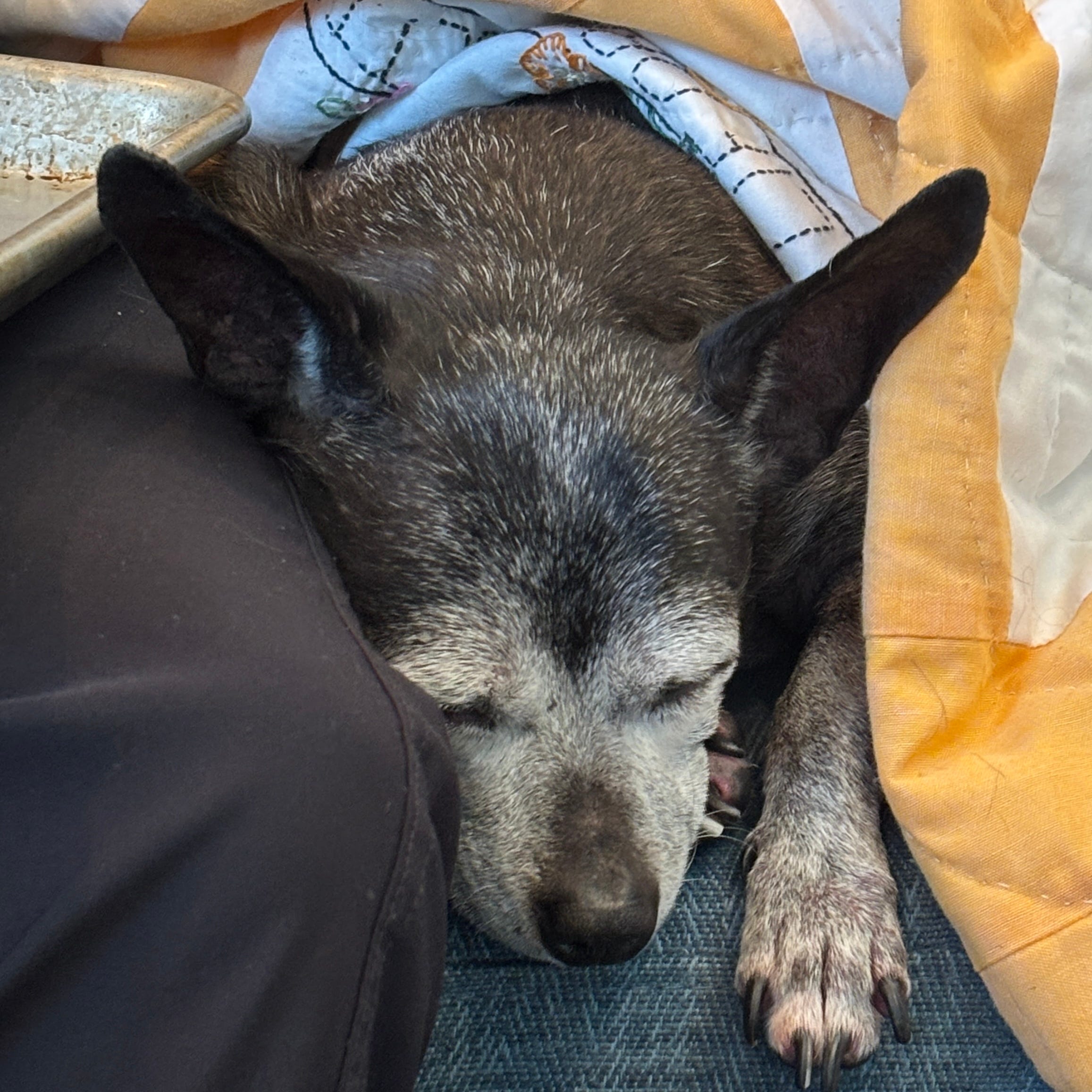
Thorfinn still lets loose any time someone is without 30 feet of our house: BARKBARKBARKBARKBARK! And, sometimes, when I’m faced with a possibility outside my preconceived notions, I let Toro out: BARKBARKBARKBARKBARK!
But I’m glad to say I am learning to identify my tendency to bark before I think and, instead, to listen, pause, and respond with curiosity and calm.
Thorfinn, unfortunately, isn’t there yet. You’re welcome to come visit, but you’ve been forewarned.

Ian Doescher is the New York Times bestselling author of fifteen books published with Quirk Books. His next book will be released in 2026 by Insight Editions. Visit him online at iandoescher.com.
As a chi mom I had to laugh at that second BARKBARKBARKBARK picture because this is my life too. 🤣
Great writing! Congrats 🎉🎊🎈 Elizabeth