

Yes
How to get what you want with just one word

There’s a game I like to introduce at parties called the Training Game, which goes like this:
One person is the trainer. A second person is the trainee. Everyone else is an observer, whose only job is to keep a very straight face. The object of the game is for the trainer to get the trainee to do a task using only one word:
Yes.
The trainee leaves the room. The trainer and the observers decide on a task they want the trainee to complete. The task can be anything from picking up a book to sitting in a chair, turning on the TV, opening Netflix, and watching five minutes of their favorite show. Once decided, the trainer invites the trainee back into the room.
The trainee stands at the door of the room. When the trainer nods, the trainee begins to move about the room.
Here’s where it gets fun. Remember, the trainer can only say yes. No eye movements, no facial expressions, no negative directions or “almost” or “warmer” – just yes. As soon as the trainer sees the trainee move in the right direction and says “Yes!”, the trainee resets: goes back to the door and re-enters the room, tries to figure out what they did that got them the yes, and then builds on it to complete their unknown task.
How much do you think you could get someone to do just by telling them yes?
The answer might surprise you.
At a party a few years ago, my friend Ben got our other friend Valerie to go from the living room, through the dining room, into the kitchen, to the freezer, and give a dog an ice cube in three minutes, with only that single encouraging word.
Yes.
How??
This is positive reinforcement. It’s how I trained Pants to sit, wait, lie down, jump on the couch, get off the bed, leave something on the floor, watch me, back up, stick her tongue out, put her nose in my hand, jump into my arms, and on and on and on.
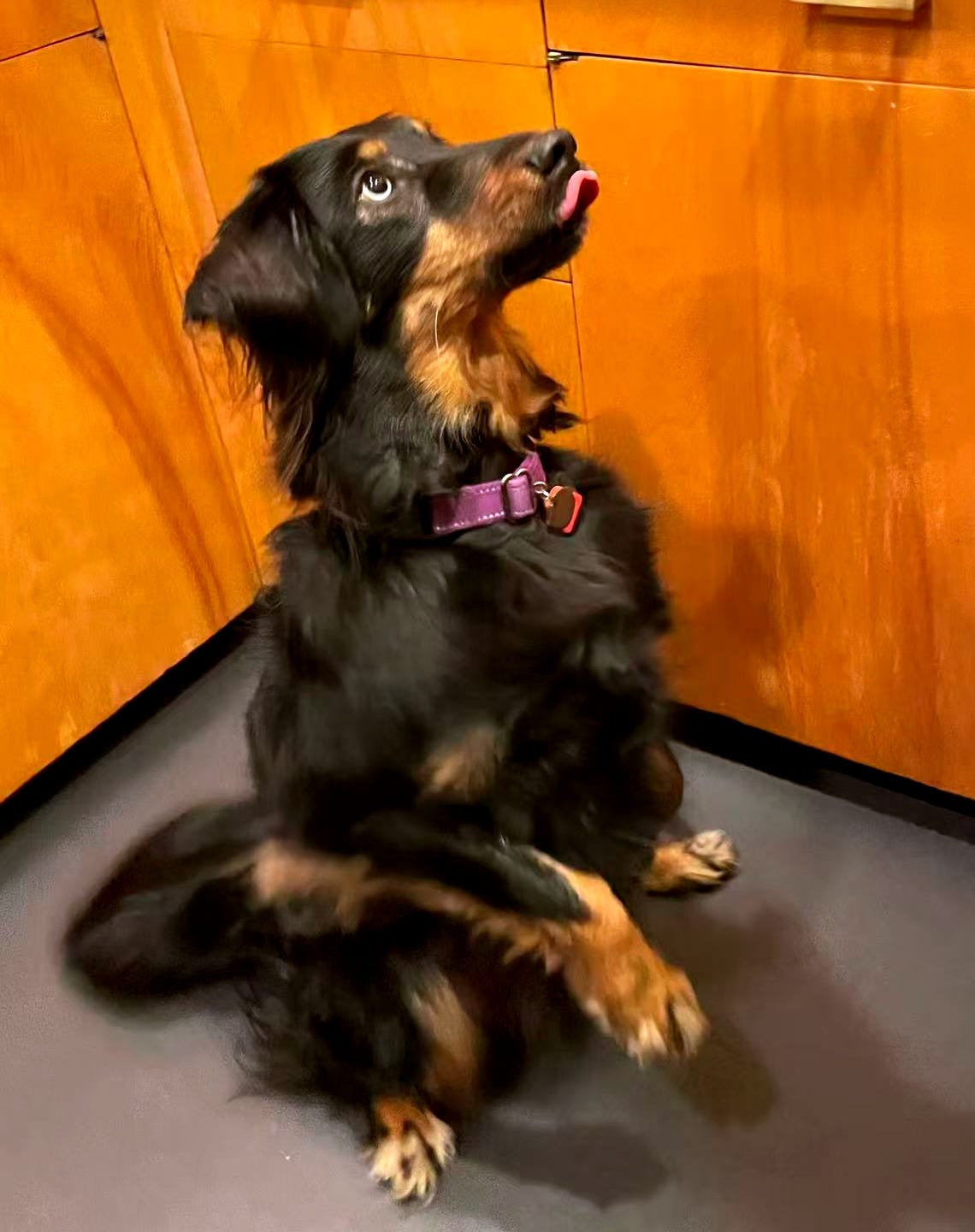
The interesting thing about training is that we’re all training each other all the time. We don’t even realize it! When I’m walking down the street and I smile at someone, and they smile back, they’ve just trained me to smile more. If, on the other hand, they frown, I’m less likely to smile at the next passerby because the first person trained me not to smile.
Imagine if the Training Game only allowed the trainer to say no. If you were the trainer, how would that feel? You step foot into the room, and immediately, the trainer says, “No!” You have to start back at the door. You step foot into the room again – “No!” And back to the door you go. You’d never figure out what the trainer actually wanted you to do because they’d be so busy telling you what not to do. You’d quit before long out of pure frustration. Not a great party game.

How often do you say no when you could be saying yes?
What if you tried flipping it around? Instead of telling your kids, “Stop yelling!” what if you told them they could use their inside voice? Even better – when they aren’t yelling, tell them what a good job they’re doing with their inside voice.
Yes.
Instead of telling your roommate to stop hoarding all the dishes in their room, you could tell them you’d like them to bring out their dishes. Even better, when your roommate does bring a dish out, tell them how much you appreciate them doing so.
Yes.
Turning a no into a yes can take some mental gymnastics. I often find that I only realize after the fact that I was saying no when I could have been saying yes – more on that next time. But every time you catch yourself, you can practice. What would a yes have looked like? What could a yes look like next time? The more you practice, the more likely you are to get the skill right, and before long, your roommate will be giving your dog ice cubes from the freezer without you saying anything but…
Yes.

I feel like I was raised on no
I love that you use positive reinforcement - and I’m sure that pups love that, too! You’re so right that telling them what they did right is so much more effective than telling them what they did wrong!